
 English
 Portugues
 Pусский
 العربية
 Türk dili
 Indonesia
 Tiếng Việt
 қазақ
қазақ فارسی
فارسی українська
 беларускі
 Filipino
 o'zbek
 български
 тоҷикӣ
 kiswahili
 Монгол
 አማራ
አማራ Ilocano
intelligent overhead line protection
Intelligent Overhead Line Protection: Enhancing Grid Reliability and Safety Overhead power lines are critical components of electrical transmission and distribution networks, delivering electricity across vast distances. However, they are exposed to various environmental and operational hazards, such as faults, lightning strikes, vegetation interference, and mechanical damage. Traditional protection schemes, while effective, often lack adaptability and real-time responsiveness. Intelligent overhead line protection systems address these limitations by integrating advanced sensing, communication, and data analytics to enhance grid reliability, safety, and operational efficiency. Key Components of Intelligent Overhead Line Protection 1. Advanced Sensors and Monitoring Intelligent protection systems utilize high-precision sensors, including optical current transformers, voltage sensors, and fault detectors, to continuously monitor line conditions. These sensors provide real-time data on current, voltage, temperature, and mechanical stress, enabling early detection of abnormalities. 2. High-Speed Communication Networks Modern protection schemes rely on high-speed communication technologies such as fiber optics, wireless networks, or power line carrier communication (PLCC) to transmit data between relays, substations, and control centers. This ensures rapid fault detection and isolation. 3. Adaptive Relaying and AI-Based Analytics Unlike conventional relays with fixed settings, intelligent protection employs adaptive relaying that adjusts trip settings based on real-time grid conditions. Machine learning algorithms analyze historical and real-time data to predict faults, distinguish between transient and permanent faults, and optimize protection responses. 4. Automated Fault Location and Isolation Intelligent systems use impedance-based or traveling wave-based methods to pinpoint fault locations with high accuracy. Automated switching devices, such as reclosers and sectionalizers, isolate faulted segments while restoring power to unaffected areas, minimizing outage durations. 5. Cybersecurity and Resilience As protection systems become more interconnected, cybersecurity is paramount. Encryption, intrusion detection, and secure protocols safeguard against cyber threats, ensuring uninterrupted grid operation. Benefits of Intelligent Protection - Improved Reliability: Faster fault detection and isolation reduce downtime and enhance power supply continuity. - Enhanced Safety: Minimizes risks to personnel and equipment by preventing cascading failures. - Optimized Maintenance: Predictive analytics enable condition-based maintenance, reducing costs and extending asset life. - Grid Modernization: Supports integration of renewable energy sources and smart grid technologies. Conclusion Intelligent overhead line protection represents a transformative shift in grid management, combining real-time monitoring, adaptive control, and AI-driven decision-making. By improving fault response and operational efficiency, these systems play a vital role in building resilient, future-ready power networks.
Producto
Categoría:
-
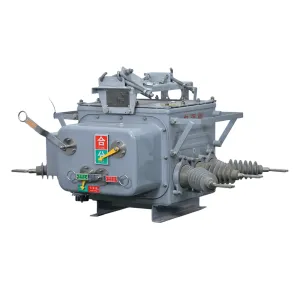
Protección de línea aérea inteligente del disyuntor de vacío para exteriores (VCB) ZW20-12
Su clasificación: Disyuntor de vacío al aire libreVistas: 1412Número:Tiempo de liberación: 2025-09-05 09:11:05
Noticias
Categoría:
¡Sin resultados de búsqueda!
Caso
Categoría:
¡Sin resultados de búsqueda!
Video
Categoría:
¡Sin resultados de búsqueda!
Descargar
Categoría:
¡Sin resultados de búsqueda!
Reclutamiento
Categoría:
¡Sin resultados de búsqueda!
Productos recomendados
¡Sin resultados de búsqueda!



 Teléfono